Understanding the Core Technology
Image to video AI relies on deep learning models trained on massive datasets of images and video footage. These models learn to understand how things move in the real world. They study how hair sways in the wind, how water ripples, how a person's expression shifts when they smile, and how light changes as a camera pans across a scene.
When you upload a photo, the AI analyzes every element in the frame. It identifies subjects, backgrounds, textures, depth, and spatial relationships. Then, based on either an automatic assessment or your text prompt, it generates new frames that extend the original image into a sequence of motion.
This technology has improved dramatically in recent years. Today's AI image to video tools are far more sophisticated. They maintain consistency across frames, preserve fine details, and produce motion that genuinely looks believable.
The Role of Prompts
One of the most practical features of modern image to video tools is prompt‑based control. Instead of accepting whatever the AI decides to do with your photo, you can guide the output by describing the motion you want.
For example, you might upload a photo of a person standing on a beach and type something like "a man holding his grandson walking towards the sea." The AI interprets your instruction and generates a video that matches that description.
This prompt‑based approach gives you creative control without requiring any technical editing skills. You just describe what you see in your mind, and the AI builds it for you.
Why Realistic Motion Matters
Static images are easy to scroll past. But a video with smooth, realistic movement stops people in their tracks.
This is especially important for creators and marketers competing for attention on social media. A product photo that suddenly comes to life, showing a car driving down a sunlit road or a model turning to reveal a new outfit, is far more engaging than a still image sitting in a feed.
Realistic motion also builds trust. If the movement looks choppy or artificial, viewers notice immediately, and it undermines the quality of your content. The better the motion, the more professional your video feels.
Audio Brings It All Together
The latest generation of image to video AI does not stop at visuals. Some tools now generate synchronized audio to accompany the video, including background music and sound effects. That layer of audio transforms the experience from something you watch into something you feel.
This combination of realistic motion and matched audio creates content that is genuinely immersive, the kind of content that performs well on social platforms and keeps audiences engaged.
A Platform That Brings It All Together
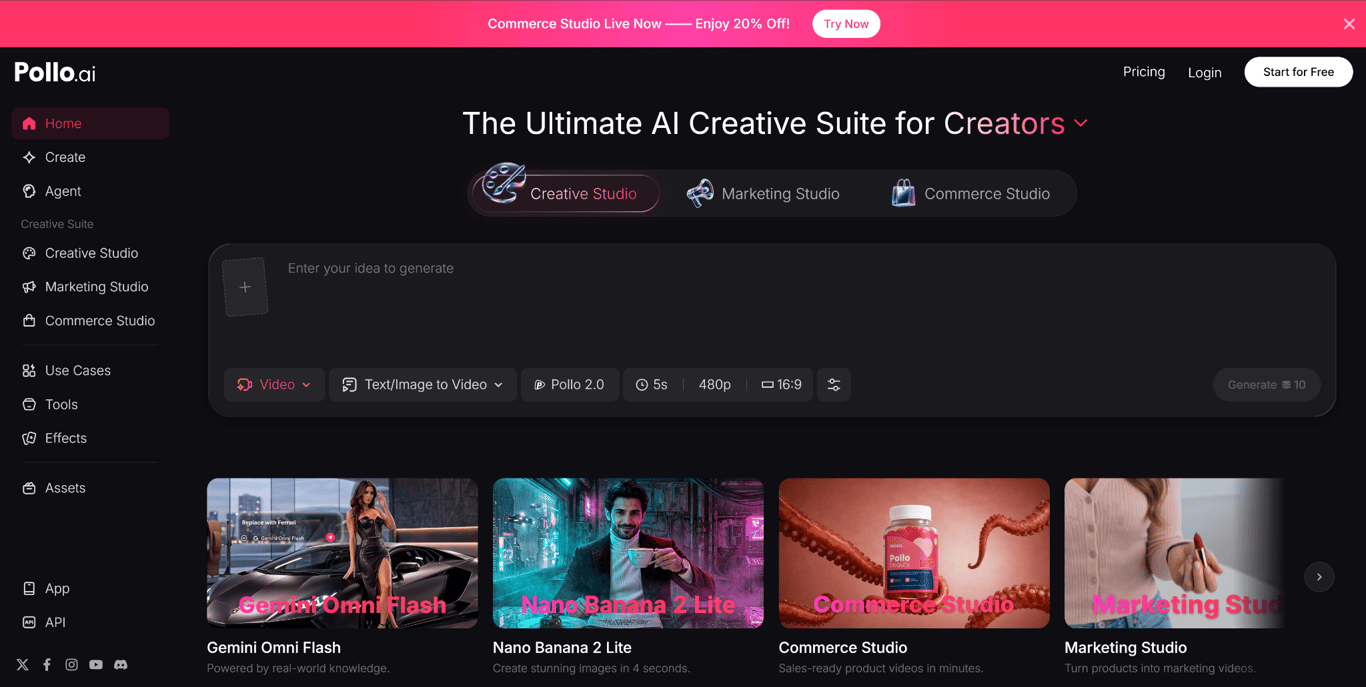
If you want to explore image to video AI without jumping between different tools and platforms, Pollo AI is worth a look. It functions as a comprehensive AI video studio, bringing together multiple leading video models in one place. Alongside its own flagship model, Pollo 2.5, the platform offers access to other popular models, so you can experiment and find the style that works best for your project.
What sets Pollo AI apart is its versatility. It is not just an image to video converter. It is a full creative workspace with over 100 AI video apps designed for different use cases. Whether you need a quick social media clip, a product demo, or a playful birthday video, you can create it without filming a single second or learning complex editing software.
Pollo AI is built for a wide range of users. Influencers use it to produce scroll‑stopping content. Marketers turn basic product photos into polished ads. Artists bring static sketches and concept art to life without building every frame by hand. And because everything lives in one place, you spend less time switching between apps and more time actually creating.
Who Benefits Most from Image to Video AI
The short answer is almost anyone who creates visual content. But some groups see especially strong results.
Social media creators benefit from the speed. Producing fresh video content daily is exhausting with traditional methods. Image to video AI lets you turn a backlog of photos into new video posts in minutes.
E‑commerce sellers can showcase products in motion without organizing expensive photo and video shoots. A few product images can become a polished video ad ready for multiple platforms.
Educators and trainers can transform diagrams, illustrations, and slides into animated explainers that are easier for audiences to understand and remember.
Artists can see their static work come alive, testing how a character moves or how a scene feels in motion before committing to a full animation project.
The Bigger Picture
Image to video AI is not a passing trend. It represents a fundamental shift in how visual content gets made. The barrier between having an idea and producing a finished video is shrinking rapidly. You no longer need a camera crew, a studio, or years of editing experience. You need a photo, a few words, and the right tool.
As AI continues to improve, the line between AI‑generated video and traditionally filmed footage will keep getting thinner. For anyone who creates content, now is the time to start exploring what this technology can do for you.